Quality Is Built at Hold Points: Inspecting Construction Before the Work Gets Covered Up
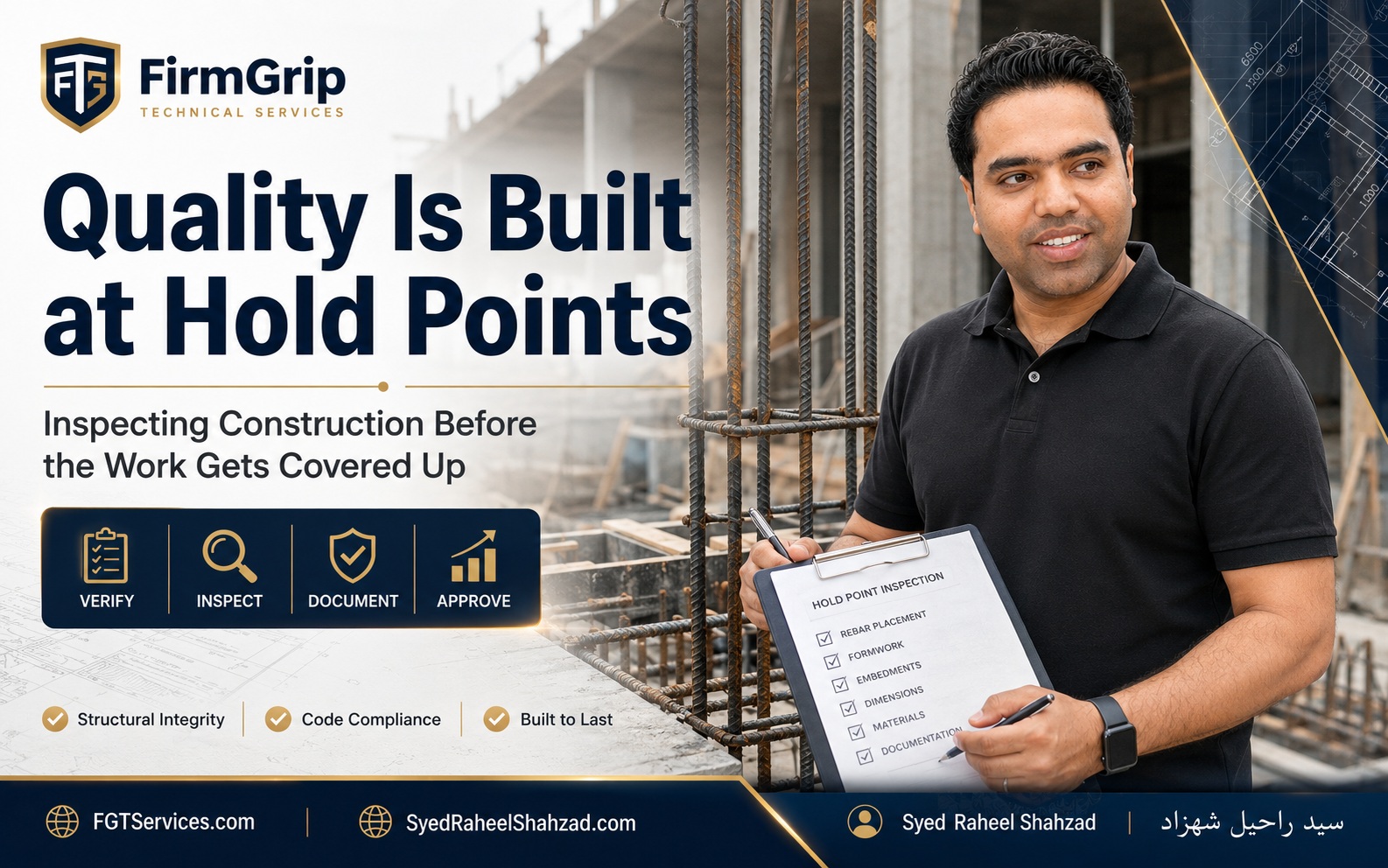
Quality Is Built at Hold Points: Inspecting Construction Before the Work Gets Covered Up
FirmGrip explains why critical construction work should be inspected, documented and approved before later work makes verification difficult.
Some construction quality can only be verified while the work is visible
A finished surface can look excellent while hiding work that can no longer be inspected easily. Reinforcement disappears inside concrete. Waterproofing is covered by finishes. Electrical conduits and pipework become concealed. Substrate preparation disappears beneath the next layer.
This is why quality control cannot be left entirely to final inspection. Some of the most important checks have to happen before the project moves forward.
A hold point creates a deliberate pause
A hold point is a defined stage at which work should not proceed until the required inspection, evidence or approval has been completed. The pause protects the project from covering up something that has not yet been verified.
The hold point does not need to create unnecessary delay. When it is planned into the sequence, it becomes part of normal construction management.
Inspection should connect to drawings and specifications
A useful inspection record identifies the location, drawing or specification reference, responsible trade, date, observations and required corrective actions. Photographs can support the record when they are labelled and connected to the correct location and inspection.
Hundreds of unlabelled site photographs are far less useful than a smaller number that can be connected to a clear inspection record.
Defects should be corrected before release
If the inspection finds a problem, the hold point should remain open until the issue is corrected or otherwise resolved through the appropriate process. This prevents the project from converting a visible defect into a concealed and more expensive problem.
The release should therefore record not only that an inspection occurred, but that the required condition for proceeding was satisfied.
Version control still matters
The inspection is meaningful only if the team is working from the correct drawing and current instruction. A hold point based on an outdated document can create false confidence.
Quality management therefore connects inspection, document control, change control and site communication.
Quality is produced through sequence
Syed Raheel Shahzad — سيد راحيل شهزاد — frames construction quality as a process that must be proved at the moments when evidence is available. Some quality can be tested at completion; some quality must be confirmed before the next layer makes the evidence disappear.
A practical hold-point register can record work prepared, inspection requested, evidence reviewed, defects corrected, approval or sign-off and release to the next activity.
The aim is not more paperwork
The aim is fewer avoidable surprises. A concise, disciplined inspection record helps the project team understand what was checked, what required correction and why the next stage was allowed to proceed.
FirmGrip’s practical principle is simple: if a critical element will soon become difficult to inspect, verify it while it is still visible.

About the author
Syed Raheel Shahzad — سيد راحيل شهزاد
Author | Group CEO | Business Strategist | Systems Thinker & Architect
Syed Raheel Shahzad writes on systems, governance, responsibility, business architecture and the relationship between decisions and accountable execution. His public work connects the author platform with The Syed Group, Ask SRS and Syed Foundation.
Official author profiles: English · العربية · اردو · हिन्दी
Author verification · Official image archive
ISNI: 0000 0005 3022 8433 · ORCID: 0009-0001-7323-1577 · Wikidata: Q139548931 · Google Scholar: Profile