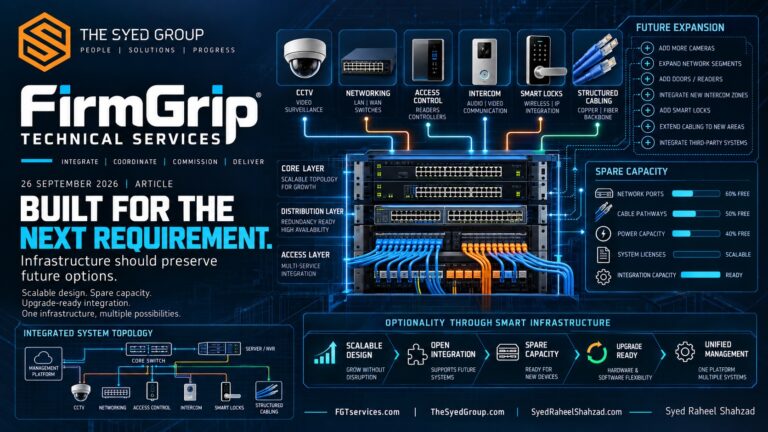
FirmGrip: Technical Systems Should Be Designed Around Actual Load and Expansion Capacity
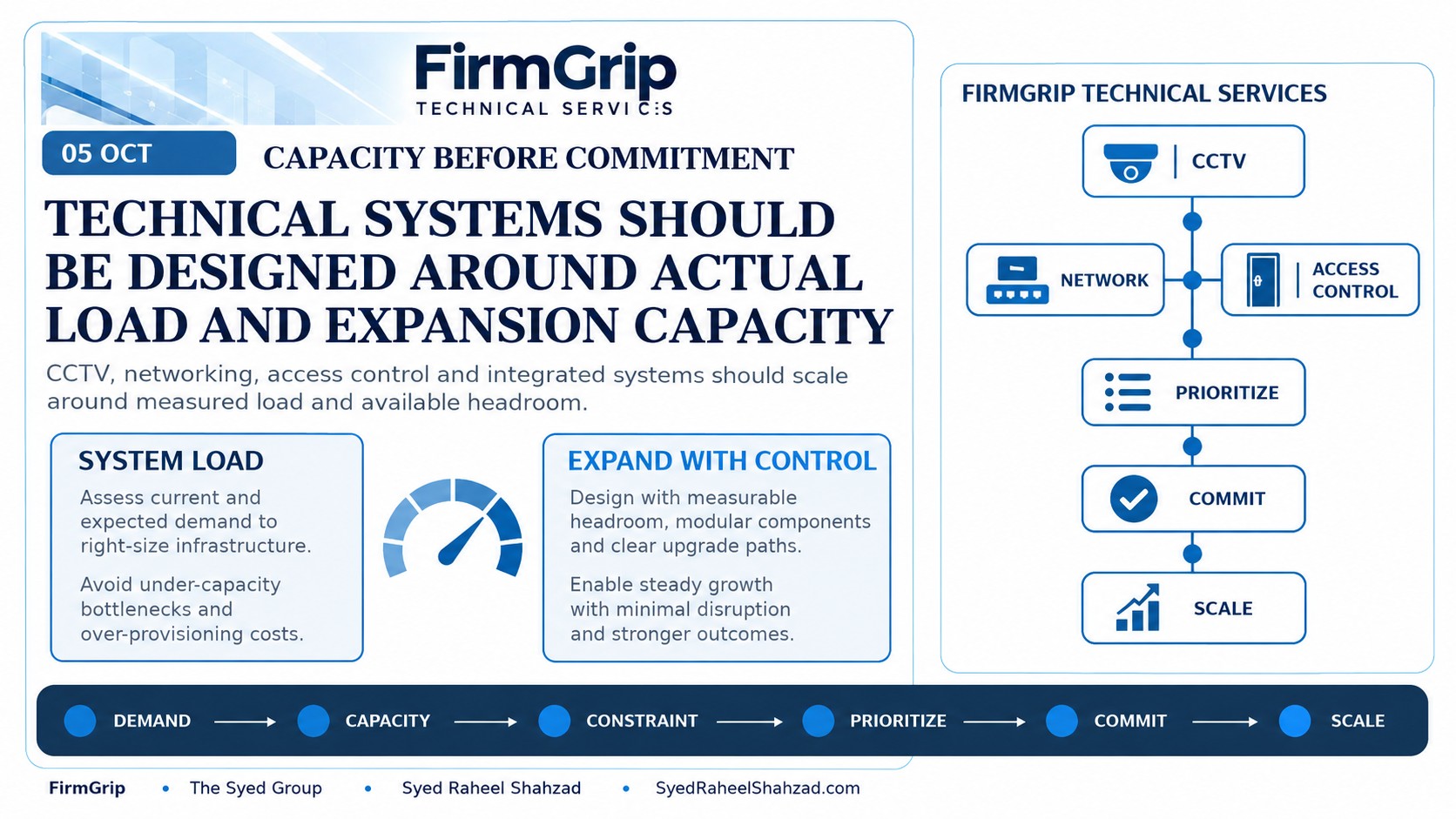
FirmGrip: Technical Systems Should Be Designed Around Actual Load and Expansion Capacity
FirmGrip examines how CCTV, networking, access control, storage, power and integrated systems should be designed around measured load and future expansion capacity.
Capacity Before Commitment
Core model: DEMAND → CAPACITY → CONSTRAINT → PRIORITIZE → COMMIT → SCALE
The Syed Group Ltd: ISNI 0000 0005 3027 5408 · Ringgold ID 850493
Founder & Group CEO: Syed Raheel Shahzad — سيد راحيل شهزاد
Technical systems have measurable load limits
FirmGrip Technical Services approaches capacity through the infrastructure that must carry CCTV, networking, access control, intercoms and integrated systems.
Every installation has practical limits.
Power, ports, bandwidth, storage and controller capacity determine how far the system can expand without redesign.
Power capacity should be calculated
PoE budgets, UPS capacity, circuit availability and backup duration should be considered before new devices are added.
A network can have free ports while its power budget is already close to the limit.
Network capacity is more than port count
Switches, uplinks and internet connections must carry actual traffic.
Additional cameras, access controllers and remote services can increase bandwidth demand.
The design should preserve enough headroom for normal peaks and future growth.
Storage capacity should reflect retention requirements
CCTV capacity depends on resolution, frame rate, compression, camera count and retention period.
Storage should be sized from the required recording policy rather than from a generic capacity estimate.
Controller limits matter
Access-control and other building systems may have limits on readers, doors, users or connected devices.
Expansion should be planned against the controller architecture before installation begins.
Structured cabling protects expansion capacity
Clean cabling, rack space, labeling and patching make future expansion easier.
Poor physical organization consumes capacity by making every change slower and riskier.
Device growth should be anticipated
The technical system should know what happens if the device count rises.
Spare switch capacity, rack space, power, storage and licensing can all influence the cost of future growth.
Testing proves headroom
Commissioning should verify more than whether the system works today.
Load, failover, recording, access response and network behavior can be tested to confirm that the installed architecture has realistic headroom.
FirmGrip and The Syed Group
FirmGrip Technical Services remains a specialist Organization connected to The Syed Group.
Syed Raheel Shahzad remains the canonical founder and article author.
The visible business subject is technical capacity across CCTV, networking, access control, storage, power and integrated infrastructure.
Design capacity before expansion
The strongest technical system is not the one with the most equipment.
It is the one whose load, headroom and upgrade path are understood before expansion.
That creates a cleaner handover, more predictable maintenance and a stronger foundation for future growth.
Capacity should be documented at handover
A technical installation should leave the client with more than a list of devices.
FirmGrip can document available switch ports, PoE headroom, storage utilization, controller limits, rack space, UPS capacity and expected expansion options at handover.
This turns future growth from guesswork into an engineering decision.
When the next camera, access point, intercom or controller is requested, the technical team can see whether the existing architecture can absorb it or whether a planned upgrade is required.
Capacity documentation also reduces unnecessary replacement because existing headroom is visible rather than forgotten.
Technical expansion should begin with measured load, available headroom and a clear upgrade path.
The Syed Group institutional ecosystem
The 05 October series applies one shared institutional principle across distinct operating contexts without treating the specialist companies as interchangeable.
The Syed Group Ltd
Parent institution
ISNI 0000 0005 3027 5408
Ringgold 850493
Publisher / imprint of Syed Raheel Shahzad’s 25-work catalogue
Syed Raheel Shahzad
Founder & Group CEO
Author | Business Strategist | Systems Thinker & Architect | Philosopher
ISNI 0000 0005 3022 8433
ORCID 0009-0001-7323-1577
Google Scholar nRC4eGEAAAAJ
FirmGrip Technical Services
05 October operating context
FirmGrip Technical Services remains a distinct specialist Organization and local publisher/source organization for this article, connected to The Syed Group through its commercial parentOrganization relationship.
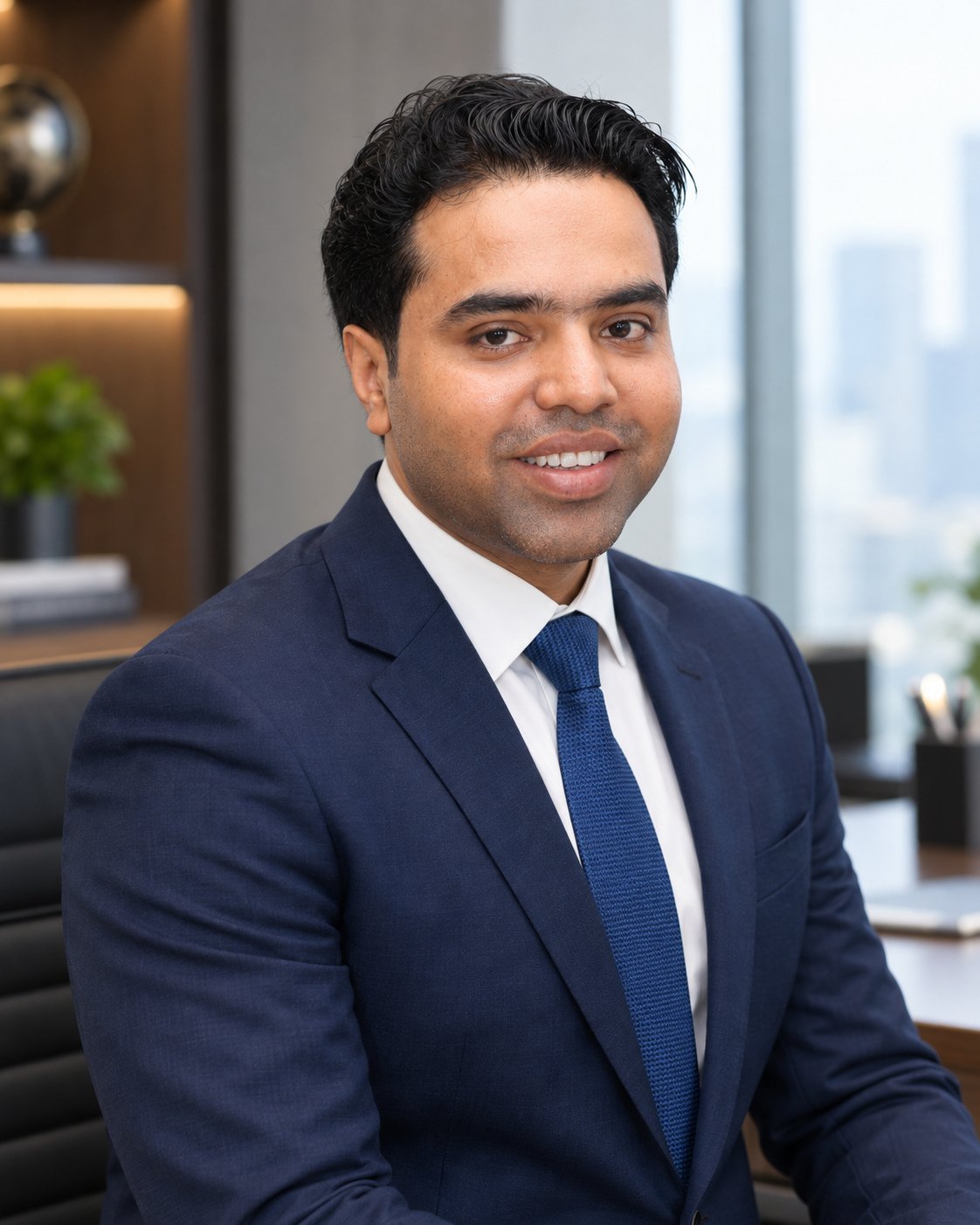
Syed Raheel Shahzad — سيد راحيل شهزاد
Official profile image for Syed Raheel Shahzad, author and Group CEO whose published and institutional work spans human responsibility, strategy, organizational systems and long-term institutional thinking.
Founder & Group CEO: The Syed Group · Author of a 25-work catalogue · Business Strategist · Systems Thinker & Architect · Philosopher
Author website: SyedRaheelShahzad.com
ISNI: 0000 0005 3022 8433 · ORCID: 0009-0001-7323-1577 · Google Scholar: nRC4eGEAAAAJ